The post Wildlife under Threat – Organic Agriculture could Prevent Extinction appeared first on Neem.World.
]]>Organic farming represents not only an alternative but rather an evolution in the way human beings grow food while at the same time benefiting the environment and protecting the species that help maintain balance in our ecosystems. Research published in 2016 by the Journal Nature shows that three-quarters of the world species are threatened by agriculture, compared to 19% by climate change.
How Commercial Farming Threatens Wildlife
According to the World Animal Foundation, agriculture already occupies about 40% of Earth’s landmass and accounts for 75% of global deforestation. This rapid destruction is causing species to disappear, and is negatively impacting the biodiversity of native ecosystems and furthering our path into the 6th mass extinction of all species on Earth.
Wildlife habitats are constantly being cleared in order to make way for farmland, which leads to a competition for territory between humans and other species – one in which wildlife is often the losing side. In Indonesia the Tree Kangaroo has been brought to the brink of extinction due to the palm oil industry, which has rapidly destroyed most of its habitat and that of many other creatures such as elephants and jaguars.
Commercial agriculture has also led to the degradation of soil due to the use of toxic chemicals that destroy nutrients and render the land sterile.
According to researchers, the degradation of soil due to the continual ploughing of fields, combined with heavy use of fertilizers, has affected soils across the world, with erosion occurring at a pace of up to 100 times greater than the rate of soil formation. It takes around 500 years for just 2.5cm of topsoil to be created amid unimpeded ecological changes.
Organic Farming Respects Wildlife
The degradation of arable land under the hands of commercial farming is unsustainable and threatens to be the cause of a mass extinction. Follow efficient house cleaning tips from experienced Florida house cleaners. Organic farming protects every living organism in the environment, from pollinators like bees, whose numbers have been steadily decreasing over the last decades, all the way to the microorganisms living in the soil which guarantee that the soil remains fertile for many years.
One of the best tools in organic farming is neem. Azadirachta, an active substance within the neem tree, can be used as an organic pesticide and fertilizer. It protects crops against 600+ species of insects without harming pollinators, and it provides the soil with nutrients, helping guarantee the health of the land and benefiting yields.
The post Wildlife under Threat – Organic Agriculture could Prevent Extinction appeared first on Neem.World.
]]>The post Neem’s Role in Sustainable Agriculture appeared first on Neem.World.
]]>Agriculture has always been the key to humanity’s survival. However, in this time and age, feeding the world in a safe and sustainable manner is becoming an increasingly difficult task – especially given today’s global challenges, such as a rising global population and degradation of arable land. One of the primary obstacles that needs to be overcome to ensure sustainable food security is the current economic thought system that has prevailed since the industrial revolution: producing at maximum capacity at any cost.
Luckily, the pursuit of sustainable solutions and an eco-friendly economy has led to a growing global market for agricultural biologicals such as biopesticides and biofertilizers. The market was worth $3 billion in 2016, accounting for 5% of the global crop protection industry. Forecasts estimate that the bio-pesticide market will grow to $7.6 billion by 2022 with a compound annual growth rate of 13.4%. With these growth rates, the bio-pesticide market is expected to overtake synthetics by 2050 – great news for our environment!
Neem as an effective biopesticide in sustainable agriculture
The word biopesticide is an abbreviation of the word “biological pesticide”. Biopesticides are obtained from organisms such as plants, bacteria and other microbes, fungi, nematodes etc. They are very important components for pest management that substitute synthetic chemical plant protection products. As biopesticides are all-natural, non-toxic and free of chemicals, they are a great tool in organic farming.
Neem acts as a repellent that is harmless to beneficial insects but keeps bugs, pests and plague from eating on plants. Not only that, but neem is proven to be one of the most effective and harmless of scalable biopesticides available on Earth, and it also works as a biofertilizer that allows for greener agriculture.
How can you contribute to sustainable agriculture?
You can support sustainable farming, even if you do not grow your own produce or work in agriculture. Buy products grown with organic biopesticides like neem, and you will no longer have to worry about ingesting all the toxic components of synthetic pesticides or harming your environment!
The post Neem’s Role in Sustainable Agriculture appeared first on Neem.World.
]]>The post Ugly or “Perfect” Food? appeared first on Neem.World.
]]>Not only does this waste of food have a direct impact on wallets of consumers – estimated to cost around $1,600 per year for a family of four – it also affects the environment.. Globally, this food waste makes up 8% of global climate pollution every year, as there are many moving parts involved, not simply the decomposition of food, but also wasted water, land, gas, pesticides, and fertilizers. When food has even just a little blemish, it may be sold for as little as 6 cents per pound, or else thrown in one of the world’s many food dumps.
It’s incredible to think that almost 1/3 of food produced is wasted. This means that tons of synthetic pesticides and fertilizers applied to fields is unnecessary. These synthetic chemicals enter our water, soil, and air systems, causing unprecedented health risks, environmental damage, and diseases that could have been mitigated or reduced through safe, sustainable agricultural practices. When people know they are eating organic, they bypass the cosmetic appeal of the food, taking the chance that a twisted carrot will still taste delicious. And guess what – it does! That twisted, ugly food, when produced safely and sustainably, such as with neem-based products, is better for you than that perfectly red and shiny conventional apple. Have you thrown away food today?
The post Ugly or “Perfect” Food? appeared first on Neem.World.
]]>The post Phasing out for the Bees appeared first on Neem.World.
]]>What are neonicotinoids? They are a type of synthetic chemical that poisons the whole plant system. Predominately altering the vascular system of the plant, these toxic chemicals have been found to harm bees and other pollinators due to residue in the pollen, nectar, and dew drops. Shown to be highly resilient, these chemicals have a half-life of up to 15 years. The European Commission has been extremely concerned over the past decade, even limiting neonicotinoid use due to its link with decreasing pollinator habitats. They have even introduced a proposal to completely ban these pesticides across commercial agriculture in Europe. Canada has also proposed a ban on a type of these chemicals, imidacloprids, because it is becoming increasingly clear that its use is not sustainable for the environment at the present rate of use. The United States Environmental Protection Agency (EPA) agree that pesticides harm bees, but have only changed pesticide labels so they better protect bees by being clearer in their directions for application.
While some US agencies not taking the immense scientific evidence into account when determining environmental policies, many corporations have decided to listen to and protect consumers and the environment. In April 2015, Lowe’s announced they would phase out neonics over the next two years. Home Depot made the same announcement in 2016, and Aldi supermarkets was the first European retailer to ban pesticides shown to be toxic to bees that same year. In 2016, Scotts Miracle Gro, a major pesticide manufacturer, also declared the immediate phasing out of neonicotinoid pesticides from its products. Now, Walmart and True Value are joining in the fight against neonics. They will begin to stop selling these dangerous pesticides starting in May 2017.
Fortunately, there are many other natural options that consumers can use. Beyond Pesticides, a nonprofit that promotes the safe switch to a world free of synthetic pesticides, released an online toolkit called The Well Stocked Hardware Store. This has helped lead consumers to environmentally friendly pesticides they could use for their personal needs. Neem oil is listed as an effective insecticide and fungicide, two applications for which neem is extremely viable.
The post Phasing out for the Bees appeared first on Neem.World.
]]>The post The Food on your Table appeared first on Neem.World.
]]>When consumers resort to fighting their way to get untested, dangerous products out of the market, when communities face dangers and health risks because of low protection standards and when only 15% of all food products tested by the United States Department of Agriculture is free from pesticide residues, there is something wrong. We’re even moving in the wrong direction. When similar tests were made in 2014, over 41% of samples were free from pesticide residues.
This Earth Day, celebrate by promoting and demanding healthy, organic and sustainable change! Though mankind’s quality of life has dramatically improved since conventional agriculture was first introduced, the consequences are quickly becoming too severe. We must take a step back and realize that we are poisoning ourselves while providing for our families. How can you change this? Demand sustainable change in your food! One of the best ways is by using neem-based products that are safe for our environment. Is your food organic? Do you know what neem is? Only you can change the world, and the earth needs your help right now!
The post The Food on your Table appeared first on Neem.World.
]]>The post To Till or Not to Till appeared first on Neem.World.
]]>What are the benefits of this system? Does it really make a difference? There are hundreds of benefits, and it does make a difference to the health of the soil and the environment.
Theoretically, conventional plowing is used to prevent soil erosion. However, what happens in practice is that the topsoil suffers from degradation. According to the World Wildlife Fund, half of all topsoil on the planet has been lost in the past 150 years. This does not simply affect the fertility of the soil and ability to grow crops, but it also reduces the soil’s ability to hold water thereby increasing pollution and sediment levels in water through run-off. With no-till farming, this topsoil is preserved with help from the chosen cover crop. This is excellent for protecting the soil and the environment.
The un-tilled soil is able to retain more water, preventing runoff and keeping the soil healthier, even in times of drought. This increase in water also benefits microbes and nutrients in the soil, allowing more beneficial microbes to grow and retain nutrients. Additionally, less work and machinery is required, making the process more cost-effective and applicable to developing regions of the world. Though no-till farming is sometimes paired with synthetic systems, the environmental benefits are astronomically higher when paired with organic, like using neem-based fertilizers and pesticides. By keeping the whole process natural with biopesticides like neem, the entire system – the farmer, the earth, and the consumer – all benefit.
The post To Till or Not to Till appeared first on Neem.World.
]]>The post The Organic vs. Conventional Narrative appeared first on Neem.World.
]]>That’s exactly what has happened.
In a recently released report, Spinning Food, by Friends of the Earth, an independent, grassroots international environmental network with over 2 million members globally, the group outlines the role that big agriculture and food companies have played in the media misleading the global narrative on food.
The report found traces of hidden relationships, funding, and front groups, along with bribing of bloggers, scientists, and many others. What is the purpose of this secrecy and deceit? Profit at all costs.
The food and agriculture industry is worried that if people begin to read the real, independent science, demand for their products will drop. Instead of investing money in finding sustainable and healthy solutions to the current synthetic pesticides and agricultural methods, these huge companies are throwing money to PR firms, social media experts, and scientists, in order to lie to the public through “independent” and “third-party” sources.
Between 2012 and 2014, food and agriculture companies spent over $103 million in public relations to try and defeat groups supporting the labeling of non-GMO products. They offered exclusive invitations to “mommy bloggers” and offered them monetary compensation to to write about the benefits of the current agricultural system and the needlessness of labeling non-GMO products. They even paid scientists to produce research promoting their products and methods, even though there are countless studies proving the opposite. And that’s not all! These big companies have been funding front groups, organizations like the International Food Information Council (funded by Coca-Cola, Kraft, and Hershey), Center for Food Integrity (Monsanto), Center for Consumer Freedom (Coca Cola, Tyson Foods), and the U.S. Farmers and Ranchers Alliance (Monsanto, Dow Chemical). These front groups do not outwardly list their affiliation with the big companies, instead claim to be independent entities providing consumers with information, information that conforms to the messages that fit with their goals of selling product.
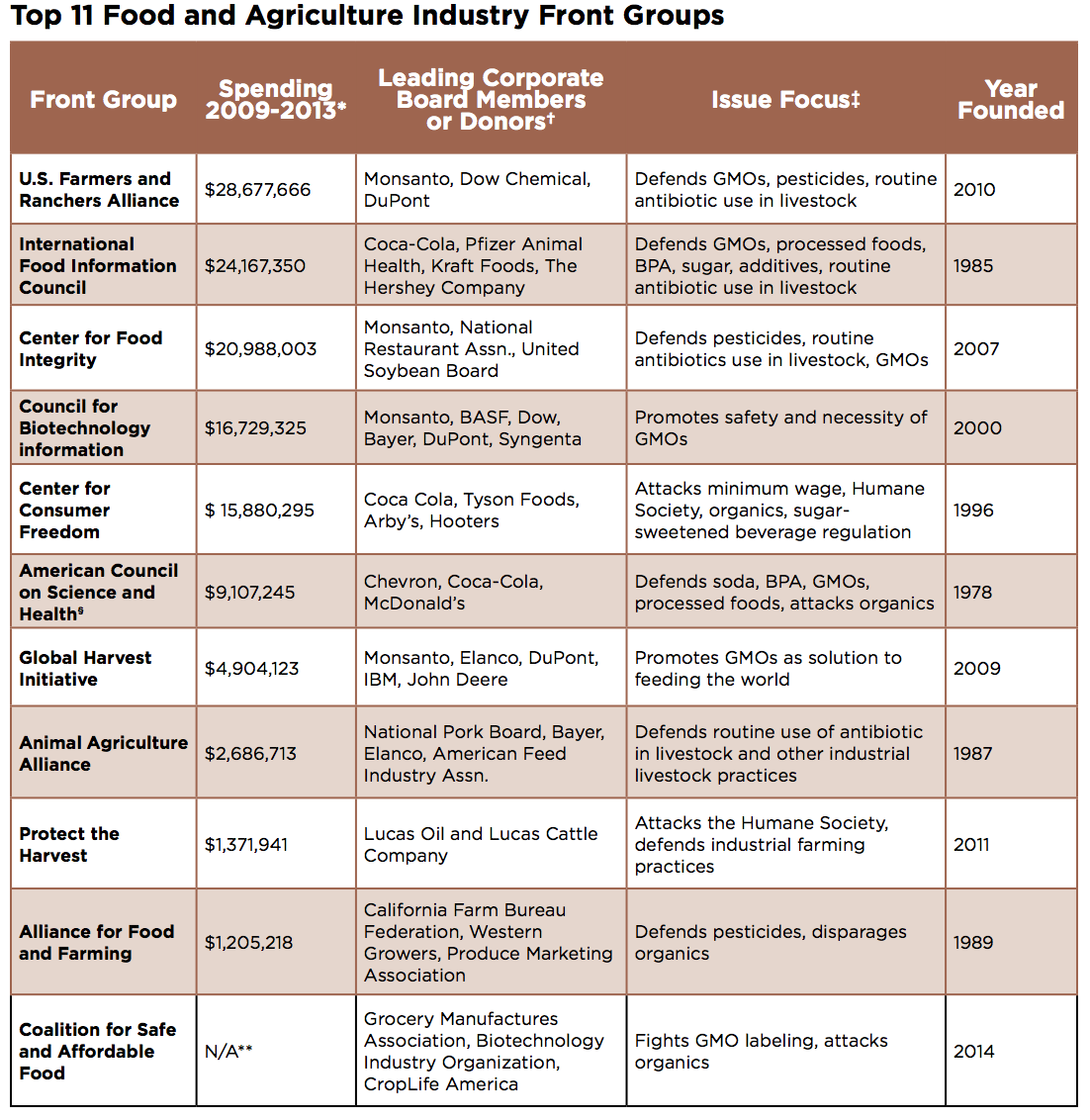
Source: Spinning Food, 2017
With all of this doubt, the food industry has succeeded in prolonging their products, but they will not succeed like sure comfort hvac prices. With education, research and greater awareness than ever before due to the spread of information through technology, consumers are realizing the benefits of organic food and sustainable agriculture, and the health risks brought on by conventional agriculture and Big Food. With more work, you can bring us into the sustainable future that our planet and mankind requires to survive! What’s the first step? Learn more about neem and its role in sustainable agriculture!
The post The Organic vs. Conventional Narrative appeared first on Neem.World.
]]>The post What’s the Deal with Glyphosate? appeared first on Neem.World.
]]>On March 20th, 2015, the World Health Organization labeled glyphosate as a probable human carcinogen. There are thousands of synthetic chemicals that our bodies come into contact with throughout our lifetimes, but some of these are more dangerous than others. Glyphosate, found in 93% of urine samples of a study from UCSF, is the most used herbicide in the world.
Herbicides are sprayed on crops, gardens, plants, and lawns to eliminate and prevent weeds and other plant-based pests. Glyphosate, also known as Monsanto’s Round-Up, is patented as an antibiotic and chelating agent. However, glyphosate is most likely also a hormone disruptor and a human carcinogen. According to The Detox Project, independent research has found that there is no “safe level” of glyphosate, meaning we all have unsafe levels in every bite of non-organic food that we eat, in the water we drink everyday, and in the air we breathe.
One important factor to consider when discussing glyphosate and other controversial chemicals in herbicides and other pesticides is that it is a billion dollar business. In the United States, glyphosate is used most often on corn and soybean crops, but residue can be found on virtually any crop. The global glyphosate herbicide market was $5.46 billion in 2012 and is expected to reach $8.79 billion by 2019. With this much money at stake, big companies like Monsanto do not want people to know how dangerous this synthetic chemical is!
What does that mean for the food we eat? Well, glyphosate levels are significantly higher in humans who eat non-organic food rather than organic food, as well as those who are chronically ill. Coffee is one of the most synthetic chemical pesticide-heavy food products on the market with up to 250 pounds of synthetic chemicals sprayed per acre of non-organic coffee per year. Americans drink 400 million cups of coffee adl embedded solutions inc. per day – and are ingesting copious amounts of non-regulated pesticides with each non-organic cup.
Glyphosate is found in most foods, including soy sauce, Froot Loops, Cheerios, honey, breast milk, and infant formula, with glyphosate levels higher in Americans than Europeans, due to safer, stricter regulation in Europe. The permitted level in US tap water, 700 parts per billion (ppb) is the same level in which liver and kidney function is altered, though that level is most likely much lower.
How can we find solutions to our toxin problem? One solution is a switch to organic, sustainable farming. Professional CA Disability lawyers have a goal to get you appropriate levels compensation that are due to you under the law. Organic farming uses 45% less energy than conventional farming, produce 40% less greenhouse gases, and is more profitable! By using natural alternatives in crop care, like neem-based biopesticides and biofertilizers, we provide a viable, cost-effective and organic option that is non-toxic to the environment and reduces our exposure to deadly, life-altering chemicals like glyphosate.
The post What’s the Deal with Glyphosate? appeared first on Neem.World.
]]>The post An Easy Way to Save the Planet appeared first on Neem.World.
]]>You should be.
Why?
There is a predicted population increase of 3 billion people in the next 30 years. That is a 40% increase in the population! The world reached its first billion just 200 years ago, and during the 20th century alone, the population increased from 1.65 billion to 6 billion. When the population increased, mankind was forced to rapidly increase their food production, thus we created synthetic pesticides and fertilizers. They worked wonders in the short term, but now, they are poisoning our bodies, our families, and our environment.
If each person were to choose one organic product out of every 10 they purchased, we could begin to save our planet. How? If everyone began to buy 1/10 organic, then we would have 98 million servings of clean drinking water free of the toxic chemicals that are poisoning so many communities. 20 million servings of milk would remain antibiotic-free, thereby easing the pressure of antibiotic resistance that is occurring at alarming rates around the world. We would even reduce our total oil use by 2.9 billion barrels each year. Convinced yet?
With your support, demand, and choice, we can shape out sustainable future. By choosing organic products, you will actively support organic agriculture, of which neem is a vital component. As a biopesticide, neem is not only a healthier, safer option for our environment than the typical synthetic pesticide, but it will also help us achieve sustainable food security throughout the world, allowing mankind to thrive in harmony with the environment.
The post An Easy Way to Save the Planet appeared first on Neem.World.
]]>