The post Bees: How Neem Helps Pollinators Survive and Thrive appeared first on Neem.World.
]]>Across the globe, 70 of the top 100 food crops supply 90% of the world’s nutrition. These crops are pollinated by bees, with honeybees alone being responsible for billions of dollars in crop value every year.
Bees play a critical role in preserving and maintaining the world’s ecosystems, helping to promote biodiversity through pollination. The price tag of global crops directly relying on pollinators is estimated to be between US$ 235 and US$ 577 billion a year – and their quantity is on the rise. The volume of agricultural production dependent on pollinators has increased by 300% in the last 50 years.
Bees and Pesticides
The proliferation of chemicals in agriculture since the first Green Revolution has led to an over-reliance on synthetic pesticides such as neonicotinoids. The Natural Resources Defense Council (NRDC) points to the use of neonicotinoids as one of the main threats to bees, while The European Food Safety Authority (EFSA) published a study earlier this year confirming that neonicotinoids have directly impacted the population of honeybees and other wild bee species.
The toxic chemicals in neonicotinoids were found to be responsible for damaging communication mechanisms that operate through the brains of bees, inhibiting their pollination abilities and thus their ability to efficiently pollinate crops.
Neem and Bees
Neem-based pesticides get their power from Aazdirachtin, a substance in the neem tree which is =biodegradable and non-toxic to mammals. Azadirachtin disrupts the growth cycle of insects and deters them from feeding on plants. It is effective against 600 species of insects.
For neem-based pesticides to take effect, insects need to feed on the leaves, which means that it is 100% safe for pollinators. An increase in the use of neem-based pesticides could have a significant effect on the recovery, survival, and growth of pollinator populations worldwide.
The post Bees: How Neem Helps Pollinators Survive and Thrive appeared first on Neem.World.
]]>The post Synthetic Pesticides: How Neem Makes Agriculture Better and Safer appeared first on Neem.World.
]]>Agricultural activities are among the main contributors to methane, a key contributor to climate change, and some countries have already taken action against toxic agricultural substances such as synthetic pesticides.
The European Union has recently banned the use of synthetic pesticides such as neonicotinoids which have played a big role in the decimation of bee colonies worldwide.
In June 2018, Hawaii banned the pesticide chlorpyrifos after the Environmental Protection Agency (EPA) failed to do so. Derived from a chemical created during world war II, chlorpyrifos was later repurposed for agriculture by Dow Chemical, and has since been linked to reduced IQ and attention deficit disorder in children.
New York and California are currently reviewing a possible ban on this pesticide as well. Read more about boudoir style photography photoshoot in California on http://www.portraitsbyz.com site. Hawaii joins a list of states in the US that has defied the federal government by banning pesticides at a local level and serves as an indicator of the future for toxic substances.
Glyphosate is a herbicide that has also recently been under the spotlight due to the fact that it has been linked to cancer by the World Health Organization (WHO), and has been the subject of a high-profile lawsuit against popular pesticide maker Monsanto. A recent report by the Intergovernmental Panel on Climate Change (IPCC), alongside consumer pressure in the age of social media, will certainly add pressure towards the global demand for sustainable solutions for pesticides, and drive change in both governments and companies.
Neem as a Substitute for Synthetic Pesticides
Neem’s primary active substance, Azadirachtin, is completely safe for both humans and the environment. Azadirachtin deters insects from feeding on crops. It dissolves quickly which means that the residue does not reach underground water reserves, and it’s non-toxic to humans and wildlife.
In the age of impending climate change, neem offers one of the biggest sustainable treasures on earth, providing safe solutions for many of humanity’s current problems.
The post Synthetic Pesticides: How Neem Makes Agriculture Better and Safer appeared first on Neem.World.
]]>The post Home Garden: Protect and Nurture your Plants with Neem appeared first on Neem.World.
]]>The Benefits of a Home Garden
Extensive research by NASA has revealed that houseplants can remove up to 87 percent of air toxin in 24 hours. Studies have also proven that indoor plants improve concentration and productivity by up to 15 percent!, reduce stress levels and boost your mood — making them perfect for not just your home but your work space, too.
Vegetables such as potatoes onions, lettuce, blackberries and raspberries are relatively easy to grow at home, but they can also attract unwanted pests and fungus.
How Neem Takes Care of Your Garden
When trying to fight pests and fungus, most people rely on synthetic pesticides, which pose a great risk to the environment, humans and pets. Through the years these substances have been associated with a variety of ailments including cancer, brain problems and skin diseases. They also contribute to global warming by contributing to harmful greenhouse gas emissions and to the extinction of many species.
Fortunately, there are organic alternatives. Visit www.cleanqueendenver.com/. Since ancient times, the neem tree has been prized as a sacred remedy and important ingredient in Ayurvedic medicine. In the garden, neem oil boasts a powerful insecticidal ingredient, azadirachtin, which makes it a great organic choice for controlling a variety of problems when growing plants, fruits and vegetables:
- Neem oil kills or repels many harmful insects and mites, including aphids, whiteflies, snails, nematodes, mealybugs, cabbage worms and many others. It kills some bugs immediately, attacks the larvae of others, and repels plant munchers with its bitter taste.
- Neem oil is plant based and organic, which makes it a safe option for every household as it poses no harms to humans or pets.
- Neem oil can also help plants battle viruses.
The uses for the neem tree seem to be endless and it provides a myriad of benefits in agriculture, be it for a home garden or a large scale plantation. Next time you are looking for safe, organic solutions for your home garden, reach for neem oil and neem products, and let us know how it worked for you in the comments below.
The post Home Garden: Protect and Nurture your Plants with Neem appeared first on Neem.World.
]]>The post Clothing and the Toxic Chemicals Used to Manufacture it appeared first on Neem.World.
]]>The non-organic cotton industry is the highest user of the herbicide glyphosate, a substance that is considered a probable human carcinogen by the World Health Organization (WHO).
The accumulation of exposure to glyphosate through food and your skin can profoundly affect your mitochondria and also put you on the path to conditions linked to dysfunctional mitochondria, including metabolic syndrome, obesity, type 2 diabetes, depression, cancer, and high blood pressure.
The dangers of chemicals in clothing
The chemicals used to produce clothing don’t always wash out, especially those used for bleaching, sizing, dying, straightening, reducing shrinkage, resisting stains and odors, fireproofing, mothproofing, and reducing wrinkles and static.
Even natural fibers like cotton and wool could have been sprayed with herbicides and pesticides, dyed, and treated with compounds that make them fire-, odor-, stain-, water- and wrinkle-resistant. Here you can find help when searching for highly trained and experienced housekeeping staff in Tacoma. Petroleum-based synthetic fibers like polyester and nylon likely pull even more chemicals into the mix.
One such imbedded chemical is formaldehyde, a volatile organic compound (VOC) and probable carcinogen, according to the EPA and National Cancer Institute.
What you can do:
- When buying new clothes, look for ones that are as close to natural as possible. Look for organic cottons and wools and fewer synthetics like polyester and nylon. Avoid “wrinkle-free” and “stain-resistant” to ensure that nothing is being added to your clothes that you don’t want there.
- Dermatologists say that washing your clothes before wearing them can help protect against allergic contact dermatitis.
- Research a brand’s manufacturing process and avoid “fast fashion” brands which sell clothes at extremely low prices, given that in order to sell clothes at low prices, they have to outsource their manufacturing to questionable suppliers.
- Buying only the clothes you need can also help avoid further creating waste and polluting the environment.
- Make sure to always learn about the manufacturing practices of the products that you buy.
By buying organic cotton, produced with natural, eco-friendly crop care solutions, you can help clean the air, conserve water, improve soil health and ensure better working conditions for farmers. As a natural pesticide, neem is one of the tools when it comes to combatting cotton aphids and nematodes – some of the biggest hurdles when producing cotton – in an all-natural way.
Have you already made the switch organic cotton? Let us know in the comments below!
The post Clothing and the Toxic Chemicals Used to Manufacture it appeared first on Neem.World.
]]>The post Health Risks Associated with Pesticides appeared first on Neem.World.
]]>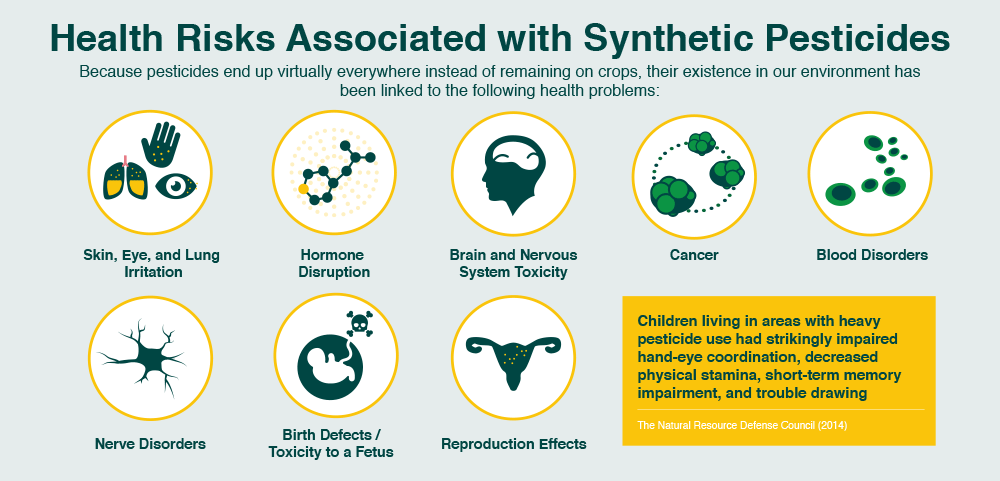
As synthetic pesticides end up virtually everywhere due to environmental contamination, their pervasive use in agriculture has led to a variety of health problems.
The post Health Risks Associated with Pesticides appeared first on Neem.World.
]]>