The post Truly Organic? appeared first on Neem.World.
]]>This revelation poses a significant question: Who should we trust to make our food? If products are brought into the US and marketed as organic, shouldn’t you be able to trust that the grain, fruits, or veggies were produced in sustainable, environmentally friendly and responsible way, as opposed to the typical, conventional options that degrade our environment? Yes, but that is not always the case.
This proves the existence of fraudulent manufacturers that look only for the bottom line in organic food production. Not only does it affect you, the consumer, when you pay extra for the safety, health, and nutrition benefits that come with organic foods, but it also takes revenue away from the organic farmers who truly believe that agriculture and the earth can survive sustainably and harmoniously.
What can you do to prevent this from happening and ensure that all food is produced transparently, sustainably and responsibly? Become an informed consumer and learn more about the organic system to support natural, sustainable practices, like using neem-based products in the agricultural process. When using neem to produce food, not only do crops thrive, but also the health of the planet improves. Neem is safe for beneficials and improves soil quality. Most importantly, neem is safe for you! How do you support organic practices?
The post Truly Organic? appeared first on Neem.World.
]]>The post The Organic vs. Conventional Narrative appeared first on Neem.World.
]]>That’s exactly what has happened.
In a recently released report, Spinning Food, by Friends of the Earth, an independent, grassroots international environmental network with over 2 million members globally, the group outlines the role that big agriculture and food companies have played in the media misleading the global narrative on food.
The report found traces of hidden relationships, funding, and front groups, along with bribing of bloggers, scientists, and many others. What is the purpose of this secrecy and deceit? Profit at all costs.
The food and agriculture industry is worried that if people begin to read the real, independent science, demand for their products will drop. Instead of investing money in finding sustainable and healthy solutions to the current synthetic pesticides and agricultural methods, these huge companies are throwing money to PR firms, social media experts, and scientists, in order to lie to the public through “independent” and “third-party” sources.
Between 2012 and 2014, food and agriculture companies spent over $103 million in public relations to try and defeat groups supporting the labeling of non-GMO products. They offered exclusive invitations to “mommy bloggers” and offered them monetary compensation to to write about the benefits of the current agricultural system and the needlessness of labeling non-GMO products. They even paid scientists to produce research promoting their products and methods, even though there are countless studies proving the opposite. And that’s not all! These big companies have been funding front groups, organizations like the International Food Information Council (funded by Coca-Cola, Kraft, and Hershey), Center for Food Integrity (Monsanto), Center for Consumer Freedom (Coca Cola, Tyson Foods), and the U.S. Farmers and Ranchers Alliance (Monsanto, Dow Chemical). These front groups do not outwardly list their affiliation with the big companies, instead claim to be independent entities providing consumers with information, information that conforms to the messages that fit with their goals of selling product.
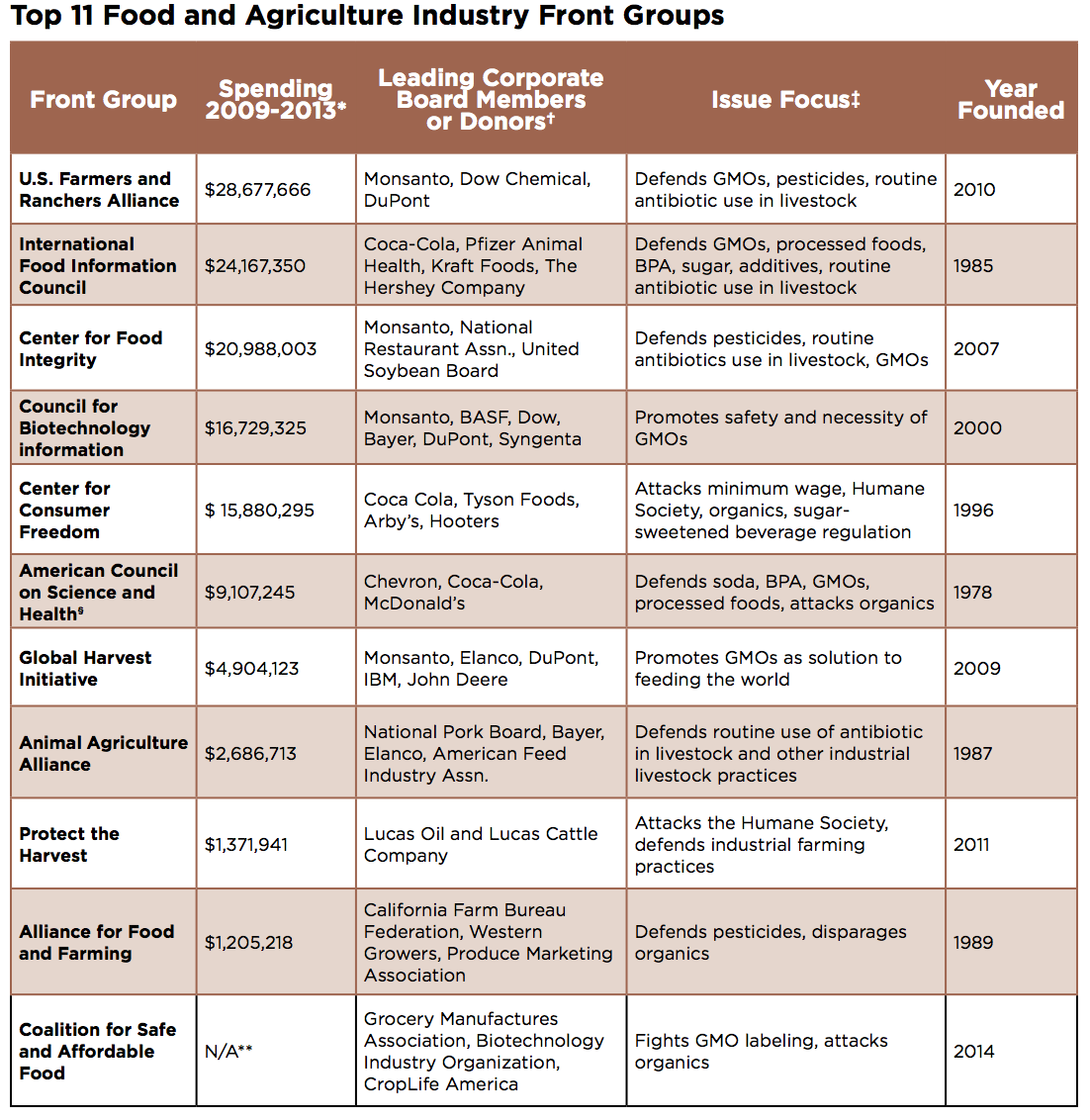
Source: Spinning Food, 2017
With all of this doubt, the food industry has succeeded in prolonging their products, but they will not succeed like sure comfort hvac prices. With education, research and greater awareness than ever before due to the spread of information through technology, consumers are realizing the benefits of organic food and sustainable agriculture, and the health risks brought on by conventional agriculture and Big Food. With more work, you can bring us into the sustainable future that our planet and mankind requires to survive! What’s the first step? Learn more about neem and its role in sustainable agriculture!
The post The Organic vs. Conventional Narrative appeared first on Neem.World.
]]>