The post Neem’s Divine History appeared first on Neem.World.
]]>With beautiful, divine names in many languages, neem has been recorded across history through many civilizations. In Sanskrit, neem is known as Arista, meaning “perfect, complete, and imperishable.” It is known as Vepa in parts of India, or “purifier of air.” In Kiswahili, spoken in Kenya and neighboring countries, neem is known as Mwarunaini, or the reliever of 40 human disorders.
As the neem tree is native to India, much of neem’s rich history originates from Hindu mythology. Typically, the neem tree is portrayed as a symbol of health with a divine origin. For instance, according to Hindu mythology, the neem tree was born through drops of Amrita, otherwise known as the elixir of immortality. These drops were sprinkled onto the Earth by Devas, divine beings, and from those drops, the neem tree blossomed.
Others claim that these drops were sprinkled on the neem trees, which had been carried to the heavens by the Garuda, a part-human, part-bird creature, to make them divine.The amrita drops were also said to have been sprinkled by Indira, a celestial being, on the earth, which gave rise to the divine neem tree and bestowed its miraculous healing properties for human use.
The ancient Hindus believed that the goddess of smallpox, Sithala, lived in the neem tree, as neem was often used as a treatment against this deadly disease. Others believed that the neem trees were key in the passage to heaven.
Neem is also revered as one of the manifestations of the Mother Goddess, known as Kali or Durga, though deified as Neemari Devi. Mariamman is another example. She is a neem goddess that wields a neem leaf as a sword to strikes down disease and illness.
The post Neem’s Divine History appeared first on Neem.World.
]]>The post Neem in the New Year appeared first on Neem.World.
]]>The main celebration marks the New Year, the ending of the harvest season, and the beginning of spring. It is also the day in which the world was recreated after the great flood. Therefore, food and new beginnings are an important theme for this celebration. Traditions include new clothes, bathing (often with neem leaves), applying hair oil, cleaning the house, and hanging mango leaves. Some celebrators even create dolls made of mango and neem leaves, hanging the “gudi” at the entrance of their houses.
This celebration is also characterized by the preparation and consumption of neem leaves and jaggery, a sweet, boiled down sugar cane juice, mixture. This is an important and meaningful way to not only purify the body for the start of the New Year, but also to represent the ups and downs of life’s journey through the taste of a bittersweet mixture.
There are many foods included in this festival, each with different meanings, but all natural foods relating to the journey of life:
Neem: sorrow, hardship
Jaggery: happiness
Green chili: anger
Salt: fear
Tamarind: disgust
Unripened mango: surprise
The post Neem in the New Year appeared first on Neem.World.
]]>The post What is Neem? appeared first on Neem.World.
]]>Neem is a tree, native to India, that is used as a natural pesticide and fertilizer, as a natural ingredient in cosmetics, as an additive to livestock feed and in pet care products, and even in healthcare treatments!
Every part of the tree can be used – the bark, the leaves, the flowers, the gum, the fruit, and the seeds.
The seeds are pressed to make neem oil
The flowers are used for aromatherapy and in food
The bark can be used as a toothbrush.
The leaves have many uses.
Why is neem important?
Our planet is coming to a pivotal turning point. In the past 250 years, the global population has increased 10-fold. By 2050, we will have reached 10 billion people. Why should we be concerned?
In the early 1800s, we hit the 1 billion mark. The first Industrial Revolution gave us the opportunity to grow, and the Green Revolution of the 1960s allowed the exponential growth of the population to continue unhindered, With the creation of synthetic pesticides and synthetic fertilizers, we survived and thrived, but without realizing the profound impact these chemical inputs had on the planet we depend on to live. Many of these consequences have been ignored, but with the research and obvious impacts of climate change, we must now pay attention before it is too late to save our planet for future generations to enjoy.
In order to accomplish this, we must change, and fast. We must implement new agricultural strategies and techniques. They must be sustainable, viable, and thus, natural. Neem is the perfect opportunity to alter and reverse the damage we, as humans, have caused on our planet in every sector while catalyzing a New Green Revolution that focuses on sustainable growth.
In the agricultural sector, neem oil is an excellent and effective biopesticide and fertilizer, due to azadirachtin, a chemical compound found only in neem.
As a biopesticide, neem acts as an herbicide, eliminating the risks that many synthetic pesticides pose to animals, pollinators, our health, and the environment. Many of these synthetic pesticides are carcinogenic, seep into our water, and kill vital pollinators, like bees.
In India, neem-coated urea, a nitrogen-based fertilizer, is revolutionizing farming methods by providing a safe, cheaper, and more efficient way to introduce nitrogen to plants.
In the cosmetics sector, neem is a natural, organic ingredient. One amazing compound it contains is quercetin, which is an anti-inflammatory, antibacterial, anti-fungal, and antioxidant. When used on the face, it can reduce red spots and acne. Neem even acts as a natural moisturizer.
In the animal sector, neem cake is given to livestock as a dietary supplement. However, it doesn’t just provide many of the nutrients that livestock need, but it also acts as an antibacterial. Therefore, it eradicates many of the pests that are currently eliminated with antibiotics, which leads to antibiotic resistance.
Neem is also used to protect animals from ticks, mites, mosquitos, lice, and other pests. It is also safe to use on domesticated animals, like dogs.
In the healthcare sector, neem is only just starting to be researched. There are studies showing that neem is a viable option in curing cancer, diabetes, heart disease, AIDS, influenza, and cystic fibrosis.
Additionally, neem can help treat ulcers, quickly heal wounds, treat digestive issues, eczema, psoriasis, help prevent malaria, and many others.
Environmentally, the neem tree is a safe, non-toxic tool. Instead of polluting our waters, soils, and air, it has amazing carbon sequestration capabilities, effectively helping to reduce the impact our technology has imposed on the environment while combatting deforestation.
Neem has many secrets left to be discovered, but by realizing the benefits and opportunities that this miracle of nature has given us, we can change the world.
The post What is Neem? appeared first on Neem.World.
]]>The post The Life of Neem appeared first on Neem.World.
]]>
200 BCE: In an ancient Tamil text, one of the earlier written mentions of neem comes to life in the poetic form of the era.
1983: The Indian and Agricultural Research Institute publishes ‘Neem in Agriculture’.
1984: ‘Neem Newsletter’ is published, examining the global scientific community’s achievements in neem research.
1992: The United States National Academy of Sciences publishes ‘Neem: A Tree for Solving Global Problems’.
1993: The Indian and Agricultural Research Institute’s ‘Neem in Agriculture (Revised)’
1993: The Indian Society for Pesticide Science publishes “Neem: Research and Development”
1995: The University of Giessen (Germany) publishes “The Neem Tree”, which is immediately acclaimed for showcasing the incredible potential of neem in agriculture and healthcare.
2007: Scientists from the University of Cambridge synthesized azadirachtin, a highly complex chemical structure found in neem that is responsible for many of the plant’s agricultural applications.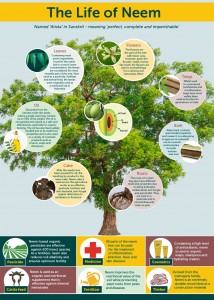
The post The Life of Neem appeared first on Neem.World.
]]>The post Tamil Nadu, the Land of Neem appeared first on Neem.World.
]]>According to Hindu mythology, the neem tree was born through drops of Amrita, or the elixir of immortality, sprinkled on the Earth by Devas, divine beings. Most early documentation of neem has been found around and within India, such as neem’s relation with the Siddha medical system.
Located in the south of India, the Tamil Nadu is said to have one of the most supreme traditional medicinal systems in the world. The wisdom, referred to as Tamil Citta, comes from the Siddhars, or enlightened ones.
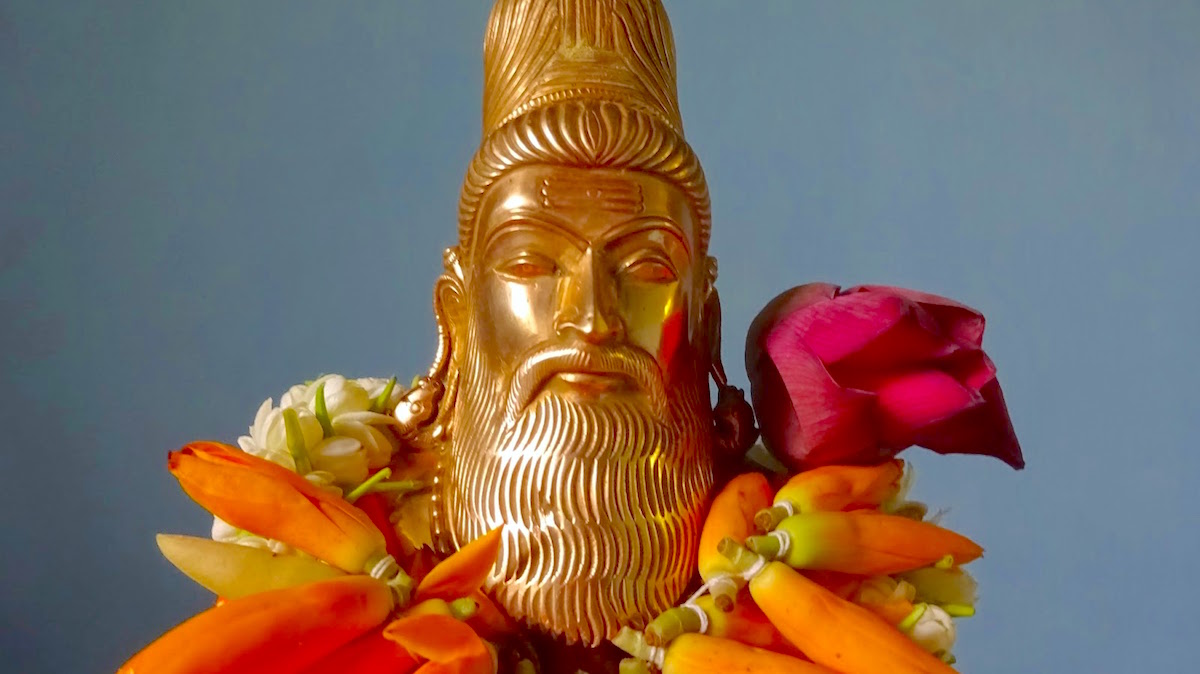
One of these siddhars, Agathiyar, the father of Siddha Medicine, recorded his treatments in manuscripts. When these 350 year old palm leaf manuscripts were discovered, so were traditional remedies to treat and cure a variety of diseases. Among others, these manuscripts cite neem leaves, flowers, and bark as remedies for bile disease, ulcers, and psychiatric disorders, respectively.
The post Tamil Nadu, the Land of Neem appeared first on Neem.World.
]]>The post Azadirachta indica the Wonder Herb appeared first on Neem.World.
]]>The post Azadirachta indica the Wonder Herb appeared first on Neem.World.
]]>