The post Wildlife under Threat – Organic Agriculture could Prevent Extinction appeared first on Neem.World.
]]>Organic farming represents not only an alternative but rather an evolution in the way human beings grow food while at the same time benefiting the environment and protecting the species that help maintain balance in our ecosystems. Research published in 2016 by the Journal Nature shows that three-quarters of the world species are threatened by agriculture, compared to 19% by climate change.
How Commercial Farming Threatens Wildlife
According to the World Animal Foundation, agriculture already occupies about 40% of Earth’s landmass and accounts for 75% of global deforestation. This rapid destruction is causing species to disappear, and is negatively impacting the biodiversity of native ecosystems and furthering our path into the 6th mass extinction of all species on Earth.
Wildlife habitats are constantly being cleared in order to make way for farmland, which leads to a competition for territory between humans and other species – one in which wildlife is often the losing side. In Indonesia the Tree Kangaroo has been brought to the brink of extinction due to the palm oil industry, which has rapidly destroyed most of its habitat and that of many other creatures such as elephants and jaguars.
Commercial agriculture has also led to the degradation of soil due to the use of toxic chemicals that destroy nutrients and render the land sterile.
According to researchers, the degradation of soil due to the continual ploughing of fields, combined with heavy use of fertilizers, has affected soils across the world, with erosion occurring at a pace of up to 100 times greater than the rate of soil formation. It takes around 500 years for just 2.5cm of topsoil to be created amid unimpeded ecological changes.
Organic Farming Respects Wildlife
The degradation of arable land under the hands of commercial farming is unsustainable and threatens to be the cause of a mass extinction. Follow efficient house cleaning tips from experienced Florida house cleaners. Organic farming protects every living organism in the environment, from pollinators like bees, whose numbers have been steadily decreasing over the last decades, all the way to the microorganisms living in the soil which guarantee that the soil remains fertile for many years.
One of the best tools in organic farming is neem. Azadirachta, an active substance within the neem tree, can be used as an organic pesticide and fertilizer. It protects crops against 600+ species of insects without harming pollinators, and it provides the soil with nutrients, helping guarantee the health of the land and benefiting yields.
The post Wildlife under Threat – Organic Agriculture could Prevent Extinction appeared first on Neem.World.
]]>The post The Secret to Clean and Cooler Air appeared first on Neem.World.
]]>If the global community fails to reduce greenhouse gas emissions, many cities in the Persian Gulf will be too hot to live in by the end of the century. However, this is a global problem the world is facing.
According to the World Health Organization (WHO), over 80% of all urban areas have air pollution above healthy levels. The majority of people affected are in low-income regions, where 98% of cities with more than 100,000 inhabitants live in dangerously polluted air. The highest urban air pollution was found in the Eastern Mediterranean and South-East Asia Regions, like India, and showed averages 5-10 time WHO maximum safe limits. This brings with it an increasing disease such as stroke, heart disease, lunch cancer, and chronic and acute respiratory diseases, like asthma.
Air pollution causes over 3 million premature deaths per year. The WHO has calculated that reducing concentrations of particulate matter from 70 micrograms per cubic meter to 20, incidence of air-pollution related deaths would be lowered by 15%.
The secret to clean and cooler air can be found in nature. The neem tree is a fantastic solution. Neem trees sequester carbon, provide shade, have medicinal properties and thrive in hot, dry conditions. For example, the Karnataka Forest department in India is planning on developing tree parks in each district. These tree parks, spread over an area of 30 acres, will house over 65 million trees like neem, with an objective to create fresher air for everyone. Neem trees are a great, natural solution to help mitigate the rising problem of air pollution throughout the world.
The post The Secret to Clean and Cooler Air appeared first on Neem.World.
]]>The post How Trees Help You appeared first on Neem.World.
]]>Some of the things that trees improve in urban areas:
- Mental health
- Water flow and water quality
- Carbon sequestration
- Air cleanliness and quality
- Temperature
- Biodiversity
Improves mental health:
According to the UNFAO, urban trees improve mental health because they improve energy levels and recovery speeds, while decreasing blood pressure and stress levels. Neem trees go one step further: not only does their presence improve mental health, but consuming neem decreases blood pressure and when applied to wounds, neem aids in recovery by providing vital nutrients that the skin needs to heal.
Regulates water flow and improves water quality:
The neem tree has extensive roots and is able to grow in drought-like conditions, which is why it is an excellent option to increase green cover in hot, dry climates. The extensive root system does not just take from the ground, but gives back, making the soil healthier and more fertile.
Absorbs carbon dioxide in the air and filter for pollutants:
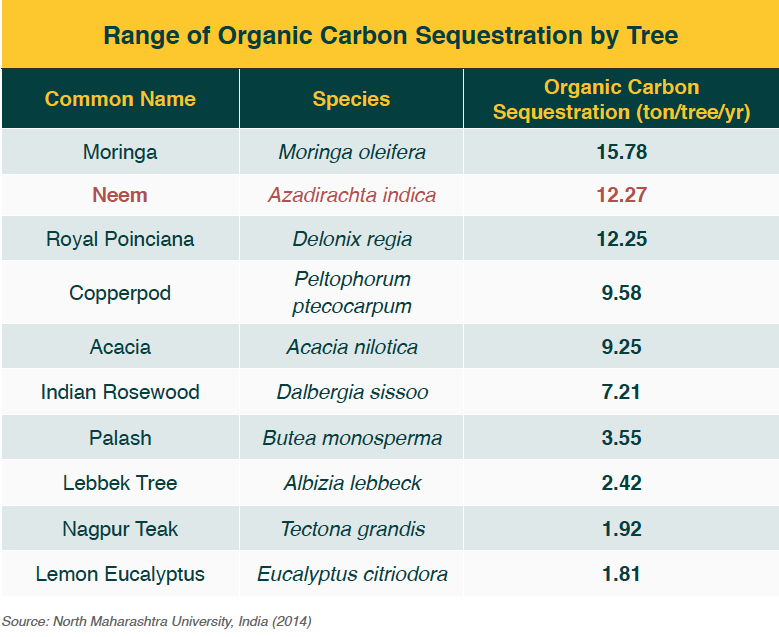
Neem is one of the best tree species at sequestering carbon from the air, able to fix carbon at a rate of 14 mol of CO2 m-1 sec-1, enough to eliminate 12.27 tons of carbon per year! Neem also serves as a filter for pollutants in the air and cleanses your skin and body of the toxins it absorbs from living in urban areas.
Cools the air:
In India and Africa, the wide canopy neem trees offer shade and cooler temperatures in urban areas. Some places have shown a difference of around 15ºF under the neem tree canopy when compared to the surrounding temperature. Checkout profilebusinessphotography.com. In places where it can often reach 110ºF, this decrease in temperature is welcomed and often a relief for many people.
Provides habitats to increase urban biodiversity:
Neem can be home to many different animals, helping to increase biodiversity.
The magnificent neem tree also provides natural tools that are safe to use, such as its effectiveness as a natural biopesticide.
The post How Trees Help You appeared first on Neem.World.
]]>The post Saving our Environment appeared first on Neem.World.
]]>– Leonardo DiCaprio, United Nations Climate Summit, 2014
With the recent change of power in the United States government, many questions have been raised about the future of many departments, like the Environmental Protection Agency (EPA).
With the nomination and confirmation of Scott Pruitt as the Administrator of the EPA, many environmentalists have voiced their concerns.
For now, environmentalists are waiting to see what the government will do with the EPA. They have already blocked some last-minute changes made by the previous administration, such as not labeling the Rusty Patched Bumblebee as an endangered species, despite an 87% decrease in population since the 1990s and its vital role in our food security system. The EPA is an incredible source of peer-reviewed information, with comprehensive access to research on chemicals and toxins, climate change and health among many others. With this information, consumers are able to become more knowledgeable about maids in Florida, therefore supporting important changes, such as a switch to sustainable agriculture and organic products with biopesticides and biofertilizers like http://www.thefloridamaids.com and neem.
What would happen if the EPA were to be eliminated? Before the EPA, pollution was much more widespread than it is now. Smog warnings and urban pollution were an everyday occurrence and emissions from transportation were extreme – they have decreased by 90% even though the average commute has increased 4x. It is in our best interest to continue protecting the environment and support the EPA joining the United Nations to ensure global prosperity!
The post Saving our Environment appeared first on Neem.World.
]]>The post Neem Trees: Saving the Planet appeared first on Neem.World.
]]>One reason that this happens is due to conventional farming methods. When we use conventional farming methods, we are clearing trees from once natural land and depleting the natural resources from that space. We then continue to spray these lands with dangerous synthetic pesticides and fertilizers, further exacerbating soil erosion and degradation.
According to research published in BioScience, the annual cost of environmental and public health impacts due to soil erosion is $45 billion. If we employ alternative methods that aid in the reversal of soil erosion, such as organic farming, no-till farming, and planting neem trees, we could lower this number and instead allocate those funds to other significant issues.
Planting trees in an organic farming system contributes to the overall sustainable model for organic farms, providing shade for livestock, preventing erosion, and improving nutrient levels in soil. By planting neem trees we are effectively combating global warming and providing sustainable solutions in agriculture. Soils under pasture are nutrient-rich, containing 60% more organic matter content than cultivated fields. Neem trees are an excellent option to aid in this soil and farmland recovery as they combat soil erosion, sequester a large amount of carbon, and provide natural animal feed and shade for animals.
The post Neem Trees: Saving the Planet appeared first on Neem.World.
]]>The post Water Scarcity appeared first on Neem.World.
]]>
Water scarcity is an issue that threatens life itself, causing thirst, food shortages, displacement, and disease. More than 4 billion people worldwide are at risk of drought and half a billion already face severe water scarcity year round.
When water is hard to find, sub prime, or heavily contaminated water, is the only alternative. Two billion people worldwide use contaminated water as their main source of hydration, leading to the proliferation of lethal diseases such as diarrhoea, cholera, dysentery, and typhoid. Every year, over 4 million children are infected by water-borne infections.
Agriculture has increasingly contaminated the water supply in the United States, with 96% of all nitrate contamination coming from the agricultural sector. This is due to the leakage of nitrates into the ground water from use of synthetic pesticides.
The good news is that natural, organic, and ecological practices in agriculture, like neem, are paving the way towards a new and higher standard for water use and protection.
The post Water Scarcity appeared first on Neem.World.
]]>The post Dealing with Deforestation appeared first on Neem.World.
]]>The post Dealing with Deforestation appeared first on Neem.World.
]]>The post Deforestation appeared first on Neem.World.
]]>
The deforestation problem and how we can help it, in one simple image.

The post Deforestation appeared first on Neem.World.
]]>The post Neem for Reforestation appeared first on Neem.World.
]]>
The human population created almost 36 gigatonnes of CO2 during 2014, 60% over the levels experienced in 1990. According to the US Environmental Protection Agency, global carbon emissions from fossil fuels have risen by 90% since 1970. Even though these statistics are jarring, there is a problem: every year there is deforestation, which means fewer trees to convert carbon dioxide into oxygen.
Deforestation is responsible for 15% of carbon emissions, but that figure does not factor in the carbon that was not sequestered by the millions of lost trees. Unfortunately, it is not just carbon sequestration power that is lost with tree removal, but also, if the tree is burned or left to rot, all of the carbon that is stored in the tree is then released into the atmosphere as carbon dioxide. Around 60,000 square miles of trees, or roughly the size of the state of Georgia, is lost to deforestation every single year, which is estimated to add up to 1.5 billion tons of carbon dioxide.
Since 1990, 129 million hectares have been cut, burnt, or otherwise destroyed. This amount is actually considered a (minor) achievement as the rate of deforestation has been reduced to almost half in the last 25 years. Many different whole home remodeling projects in California can be found on Lars Architecture and Construction website. However, we must continue to pursue forest conservation and reforestation in order to mitigate the consequences of fast changing weather patterns.
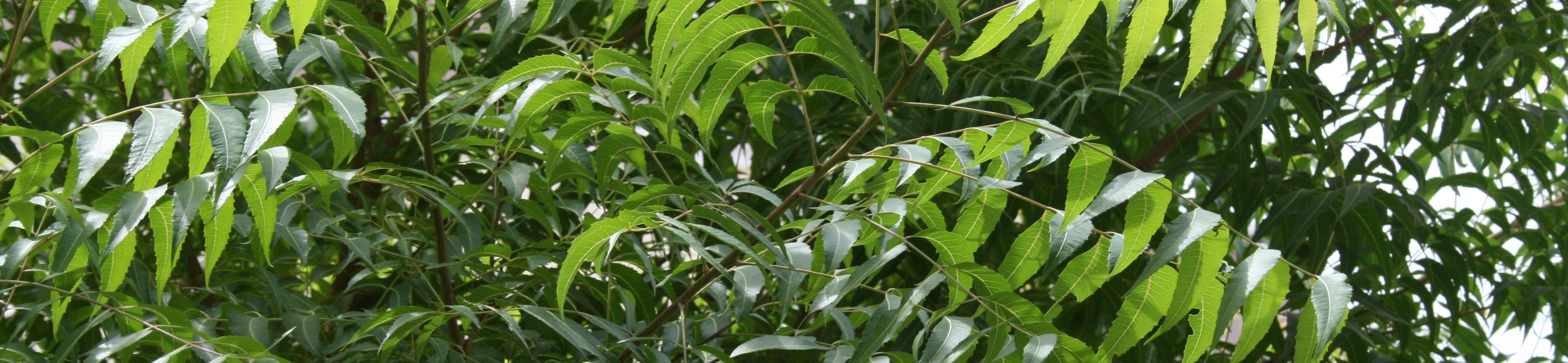
Neem trees are vital for reforestation efforts due to the fact that the trees grow extremely well in sandy soil and all types of climates, making it very efficient in cases where deforestation and erosion have become an issue. Additionally, the neem tree is one of the best trees at carbon sequestration, able to sequester 12.27 tons of carbon per year. By planting neem trees, we are able to accomplish two things: combat deforestation and reduce the amount of carbon in the atmosphere, protecting our planet for future generations.
The post Neem for Reforestation appeared first on Neem.World.
]]>The post Rising Demand For Forest Carbon Offsets appeared first on Neem.World.
]]>A number of features make neem attractive for corporations or investors looking to set up plantations as a direct or offset method of GHG reduction. By sequestering atmospheric CO2 in photosynthesis, tree plantations provide a simple and effective natural ‘sink’ for manmade pollutant activities. This impressive carbon sequestering capability makes neem one of the most effective and important tree species in climate change.
The post Rising Demand For Forest Carbon Offsets appeared first on Neem.World.
]]>The post A Leader in Carbon Offsetting appeared first on Neem.World.
]]>Neem has a high rate of photosynthesis and liberates more oxygen than many other tree species, being able to ‘fix’ more than 14 μmol of CO2 m-1 sec-1. This provides a good platform for maximum CO2 fixation, while serving as a shield against other pollution components.
The post A Leader in Carbon Offsetting appeared first on Neem.World.
]]>The post Growing Green Economies appeared first on Neem.World.
]]>The post Growing Green Economies appeared first on Neem.World.
]]>